
Blog
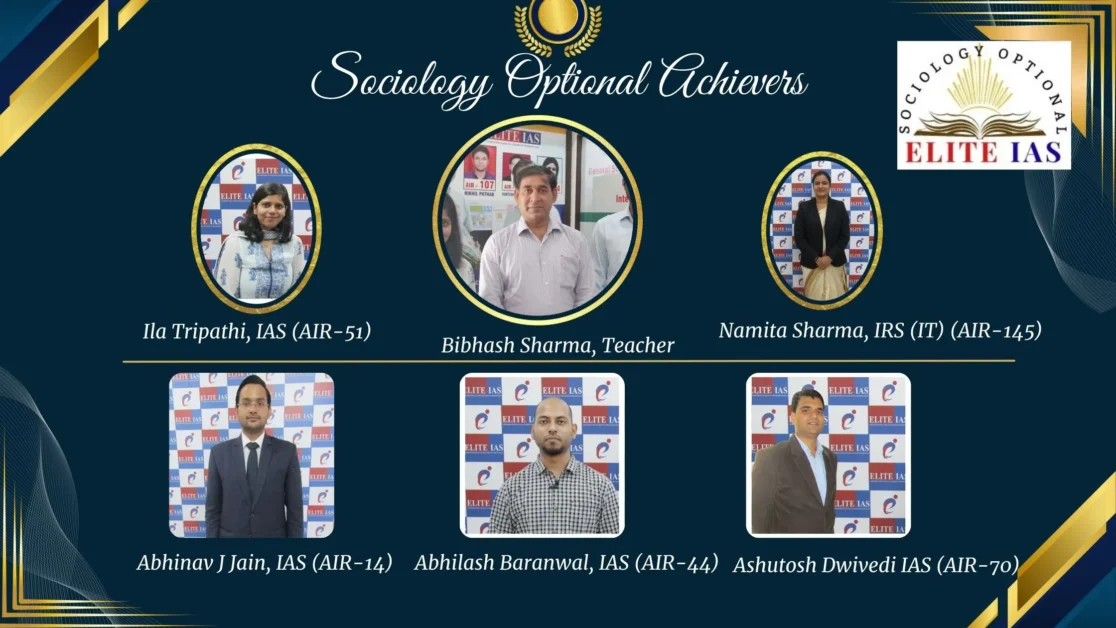
Bibhash Sharma Sociology Classes Review - Best Sociology Teacher for UPSC
Choosing an optional subject for the UPSC Civil Services Examination is not a peripheral decision; it is a strategic commitment that significantly influences Mains performance and final ranking. Among the available optionals, Sociology has consistently attracted aspirants from diverse academic backgrounds due to its compact syllabus, overlap with General Studies, and relevance to contemporary Indian society. However, the scoring potential of Sociology Optional is not automatic. It materializes only when conceptual understanding is translated into answers that align with the Union Public Service Commission’s evaluation logic. This is where the role of the teacher becomes decisive.
Here we offer a structured academic review of Sociology Optional coaching under Bibhash Sharma, focusing on teaching methodology, evaluation orientation, and its relevance to UPSC Mains. Rather than adopting a testimonial or promotional tone, the discussion examines how instructional design, answer-writing discipline, and examiner-oriented preparation determine whether Sociology functions as a high-scoring optional in practice.
Why Sociology Optional Requires the Right Teacher for UPSC

Sociology is often described as an accessible optional because it does not require prior academic specialization. While this is broadly accurate, it can also be misleading. Accessibility of content does not automatically translate into scoring answers. Many aspirants cover the syllabus comprehensively yet struggle to cross the 240-250 mark range in Mains. The limitation, in most cases, lies not in knowledge accumulation but in sociological articulation.
UPSC Sociology answers are evaluated not merely for factual correctness but for interpretive depth, conceptual clarity, and the ability to relate theory with empirical and contemporary contexts.
The examiner expects candidates to demonstrate sociological imagination – an ability to move from common-sense observations to theoretically informed analysis. Without structured guidance, aspirants often reproduce textbook definitions or sociological thinkers in isolation, resulting in answers that are technically correct but evaluatively weak.
This gap between syllabus completion and score realization explains why Sociology Optional requires careful mentorship. A teacher’s role extends beyond content delivery to shaping how aspirants read questions, select relevant dimensions, and structure arguments within strict word limits. When this mediation is absent, Sociology’s perceived scoring advantage becomes inconsistent.
What Defines the Best Sociology Teacher for UPSC
The idea of the best sociology teacher for UPSC is often reduced to popularity or anecdotal success rates. From an academic and evaluative standpoint, however, the definition is more precise. A teacher’s effectiveness is reflected in how well aspirants internalize the logic of UPSC answer evaluation and reproduce it independently under exam conditions.
First, conceptual calibration is essential. Sociology involves abstract frameworks – functionalism, conflict theory, symbolic interactionism, and their Indian adaptations. A competent teacher ensures that students do not treat these as isolated theories but as analytical tools applicable across syllabus areas. Second, answer structuring is critical. UPSC answers are judged on coherence, balance, and relevance. Teaching must therefore emphasize introduction-body-conclusion logic, prioritization of dimensions, and integration of thinkers, examples, and contemporary references without overcrowding the answer.
Third, examiner perspective matters. The UPSC does not reward verbosity or excessive citation; it rewards clarity and sociological relevance. Teachers who explicitly decode examiner expectations help aspirants avoid common pitfalls such as over-theorization or generic social commentary. In this sense, the sociology best teacher for UPSC is one who trains students to think like evaluators, not just learners.
Bibhash Sharma’s Academic Orientation in Sociology Optional
Within this framework, Bibhash Sharma’s approach to Sociology Optional can be understood as method-centric rather than content-centric. His teaching orientation emphasizes how sociological knowledge is operationalized in answers rather than merely acquired. The focus remains on aligning preparation with the evolving nature of UPSC Sociology papers, which increasingly test interpretation, application, and contextual awareness.
The instructional design places early emphasis on understanding the structure of the syllabus and the interlinkages between Paper I (theoretical foundations) and Paper II (Indian society). Instead of treating the two papers as separate domains, the pedagogy highlights how classical and modern sociological theories inform analyses of Indian social institutions, social change, and policy-related issues. This integrated approach reflects how UPSC frames questions and evaluates depth.
Another notable aspect of the academic orientation is the systematic incorporation of answer-writing from the initial stages of preparation. Rather than postponing writing practice until syllabus completion, the methodology encourages iterative writing and feedback cycles. This helps aspirants internalize sociological language, refine argumentation, and gradually align their responses with UPSC standards.
Understanding UPSC Evaluation Expectations in Sociology
UPSC evaluation in Sociology is guided by consistency and balance. Examiners assess whether an answer demonstrates conceptual clarity, relevance to the question, and the ability to apply sociological perspectives meaningfully. Overemphasis on thinkers without contextual application, or excessive reliance on current examples without theoretical anchoring, tends to dilute scores.
Teaching that explicitly addresses these evaluation parameters helps aspirants calibrate their answers. By breaking down previous years’ questions and discussing why certain responses score higher than others, the preparation process becomes evaluative rather than descriptive. This orientation reduces guesswork and aligns aspirant output with examiner benchmarks.
Role of Answer Writing and Sociological Interpretation
Answer writing in Sociology is not a mechanical exercise; it is an interpretive one. Questions often demand that candidates unpack implicit assumptions, identify multiple dimensions, and present balanced sociological arguments. Effective guidance therefore trains aspirants to read questions critically, identify command words, and structure responses accordingly.
The emphasis on interpretation also extends to the use of examples. Sociological answers gain strength when empirical illustrations are relevant, concise, and analytically connected to theory. Teaching that foregrounds this linkage helps aspirants avoid anecdotal narration and maintain academic rigor. Over time, this disciplined approach to answer writing becomes central to achieving consistently higher scores.
Why Many Aspirants Identify Bibhash Sharma as Sociology Best Teacher for UPSC
Within the broader landscape of optional-subject coaching, faculty recognition tends to emerge from methodological consistency rather than isolated outcomes. Aspirants who describe Bibhash Sharma as among the sociology best teacher for UPSC typically do so by referencing the predictability and coherence of the teaching framework. The emphasis remains on building answers that meet UPSC’s evaluative expectations across years, not on tailoring preparation to a single examination cycle.
Two factors recur in such assessments: first, a structured progression from conceptual grounding to applied analysis; second, a disciplined feedback loop that gradually aligns aspirant writing with examiner benchmarks. Together, these elements explain why students with diverse academic backgrounds – engineering, humanities, or working professionals – report convergence toward comparable answer quality by the end of preparation.
Teaching Methodology and Classroom Orientation
The classroom orientation is anchored in clarity of purpose. Sessions are designed to move from theory to application, ensuring that sociological concepts are not treated as abstract end points but as analytical instruments. Core thinkers and perspectives are introduced with explicit discussion on where and how they add value in answers, rather than being memorized as standalone references.
Another defining aspect of the methodology is the sequencing of topics. Paper I and Paper II are not taught in isolation; instead, conceptual bridges are emphasized so that classical theory informs analyses of Indian society, social change, and policy-relevant issues. This integrated approach mirrors the way UPSC frames questions and reduces fragmentation in aspirant understanding. Over time, students develop a habit of drawing from multiple syllabus areas within a single response – an attribute often associated with higher evaluative scores.
Answer Writing Framework and Evaluation Discipline
Answer writing is treated as a continuous discipline rather than a post-syllabus activity. Structured frameworks are introduced early, covering introduction design, prioritization of dimensions, and conclusion strategies that reinforce analytical closure. The intent is not to impose rigid templates but to instill internal structure that functions under time pressure.
Evaluation discipline plays an equally critical role. Feedback is focused on relevance, balance, and sociological depth rather than surface-level corrections. Aspirants are guided to identify why certain answers underperform despite adequate content coverage – often due to misreading command words or disproportionate emphasis on theory versus application. This calibration with examiner psychology is central to crossing the threshold from average scores to the 280-300+ range, where differentiation is subtle and consistency matters.
Sociology Optional Courses Offered Under Bibhash Sharma at Elite IAS
Course design reflects the same methodological priorities, with format flexibility intended to accommodate varied aspirant circumstances rather than dilute academic rigor. Each format maintains a common pedagogical spine: conceptual clarity, answer-writing integration, and evaluative feedback.
Classroom and Live Online Sociology Optional Programme
The classroom and live online programmes are structured to replicate an interactive academic environment. Live sessions emphasize discussion and clarification over dictation, encouraging aspirants to articulate sociological arguments verbally before translating them into written form. This interaction supports conceptual internalization and prepares students for the interpretive demands of written answers.
Live online delivery extends this model beyond geographic constraints while preserving engagement through scheduled interactions and doubt-resolution mechanisms. The academic focus remains consistent, ensuring that delivery mode does not alter learning outcomes.
Recorded Sociology Optional Course for Working Aspirants
For aspirants managing professional or academic commitments, recorded programmes provide temporal flexibility without compromising content depth. Lectures are structured to mirror classroom sessions, allowing learners to pause, revisit complex arguments, and integrate preparation into constrained schedules.
Supplementary mechanisms for doubt resolution and writing practice ensure that recorded learning does not become passive consumption. When combined with periodic evaluation, this format supports sustained progress for working aspirants who require adaptable pacing.
Who Should Consider Sociology Optional Under Structured Guidance
Sociology Optional under structured guidance is particularly relevant for aspirants seeking a balance between accessibility and analytical depth. Those without prior exposure to sociology benefit from systematic conceptual scaffolding, while experienced aspirants gain from recalibration of answer-writing and evaluative alignment.
The approach also suits candidates aiming to integrate optional preparation with General Studies. Sociology’s overlap with GS topics – social justice, governance, and social issues – becomes more productive when guided by a sociology optional teacher who explicitly connects theory with contemporary contexts. In such cases, optional preparation reinforces broader Mains performance rather than competing for time and cognitive bandwidth.
Final Academic Review and Strategic Takeaway
Sociology Optional’s reputation as a scoring subject is contingent on the quality of guidance that mediates between syllabus knowledge and evaluative execution. The analysis presented across this review suggests that outcomes attributed to the sociology best teacher for UPSC label emerge from methodological consistency rather than promotional claims. Teaching structures that foreground interpretation, disciplined answer writing, and examiner-oriented feedback create conditions where aspirants can reliably translate preparation into marks.
For candidates evaluating Sociology Optional coaching, the critical consideration is not format or popularity but alignment with UPSC’s assessment logic. Preparation anchored in such alignment enables informed decision-making and sustained performance, allowing aspirants to approach the examination with clarity, discipline, and academic confidence rather than expectation-driven uncertainty.
Frequently Asked Questions
- Is Sociology Optional actually a scoring subject in UPSC?
Sociology Optional can be a scoring subject when preparation aligns with UPSC’s evaluation standards. Scores depend less on syllabus completion and more on sociological interpretation, answer structure, and the ability to apply theory to contemporary and Indian contexts.
- Why do many aspirants fail to score high in Sociology Optional despite finishing the syllabus?
Most aspirants struggle not with content but with answer presentation. UPSC evaluates clarity, relevance, and analytical depth. Without structured guidance on interpretation and answer writing, syllabus knowledge alone rarely converts into high marks.
- What defines the best sociology teacher for UPSC?
The best sociology teacher for UPSC focuses on examiner-oriented answer writing, conceptual integration, and feedback-driven improvement. Effectiveness is reflected in how consistently students learn to frame sociological arguments rather than memorize content.
- How is Sociology Optional teaching under Bibhash Sharma academically structured?
The teaching approach emphasizes understanding UPSC question demand, linking theory with application, and developing disciplined answer-writing habits. Preparation is structured around evaluator expectations rather than rote coverage of sociological theories.