
Blog
The Role of Communication Skills in Cracking the UPSC Personality Test (Interview)
The Union Public Service Commission (UPSC) Civil Services Examination is widely regarded as one of the most demanding examinations in India. Every year, thousands of aspirants devote years to mastering history, polity, economics, and current affairs. Yet, many candidates who perform well in the Preliminary and Mains stages fail to clear the final stage — the Personality Test, commonly known as the UPSC interview.
This raises an important question:
If knowledge is sufficient to clear the exam, why do well-prepared candidates still struggle in the interview?
The answer lies in communication skills.
The UPSC interview is not merely a test of knowledge. It is an assessment of clarity of thought, emotional balance, social awareness, and administrative suitability. Communication is the medium through which all these qualities become visible to the interview board.
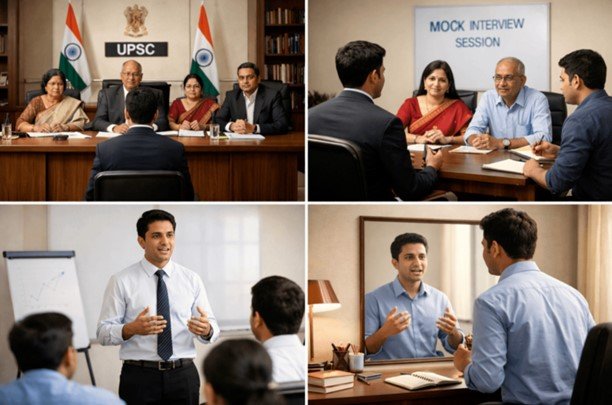
Understanding the Purpose of the UPSC Personality Test
- interact with citizens
- communicate policies
- resolve conflicts
- coordinate with departments
- represent the government in official meetings
Communication Skills vs Knowledge
- A technically correct answer delivered hesitantly, without structure, eye contact, or confidence.
- A reasonably correct answer explained calmly, logically, and respectfully.
- clarity of speech
- ability to explain ideas
- listening skills
- confidence without arrogance
- logical flow of thought
The Importance of Structured Speaking
- “How would you handle a protest in your district?”
- “What is your opinion on balancing development and environmental protection?”
- “Why do you want to join civil services?”
Language Clarity and Administrative Confidence
- speaking too fast
- unclear pronunciation
- excessive fillers (“umm”, “actually”, “basically”)
- long and unstructured answers
Listening: The Most Ignored Communication Skill
- listens completely
- pauses briefly
- organizes thoughts
- responds concisely
Handling Stress and Unexpected Questions
- opinion on controversial topics
- questions outside optional subject
- counter-arguments to candidate’s answer
Non-Verbal Communication
- posture
- eye contact
- facial expression
- tone of voice
Why Many Candidates Lose Marks
- inability to explain opinions clearly
- excessive nervousness
- poor articulation
- rambling answers
- lack of structured thinking
The Civil Servant as a Public Communicator
- addressing public meetings
- explaining government schemes
- interacting with media
- negotiating with stakeholders
Conclusion
The UPSC Personality Test is not a knowledge examination; it is an evaluation of suitability for public administration. Communication skills serve as the bridge between knowledge and personality. They reflect clarity of thinking, emotional maturity, and leadership potential.
Candidates often focus entirely on studying subjects while neglecting the ability to express ideas clearly. However, the final selection frequently depends on how effectively a candidate communicates rather than how much information the candidate remembers.
Preparation for the interview should therefore include not only current affairs and mock interviews but also conscious improvement of speaking, listening, and articulation skills.
In the end, the interview board is not selecting a student.
It is selecting a future administrator — and administration fundamentally depends on communication.